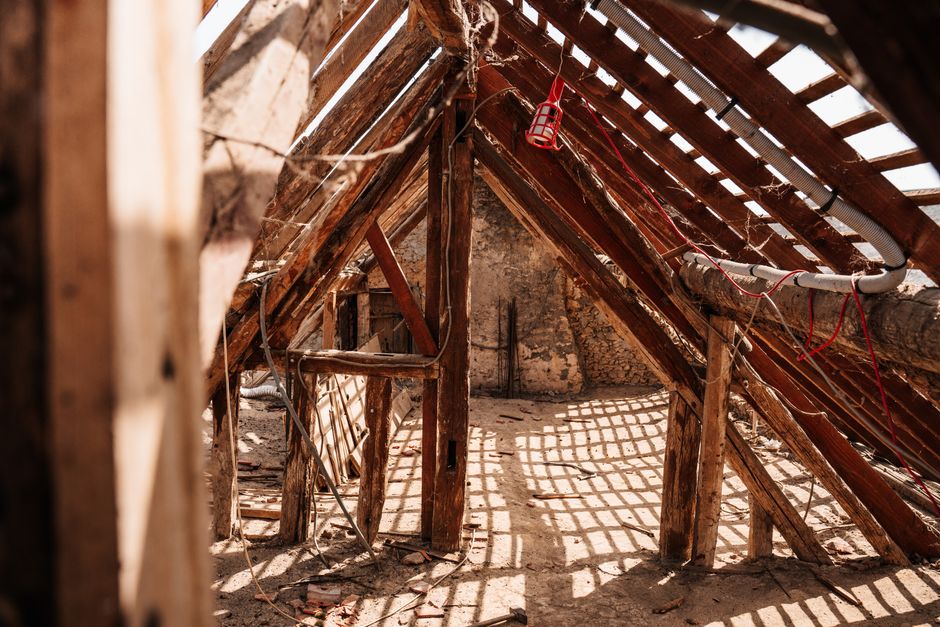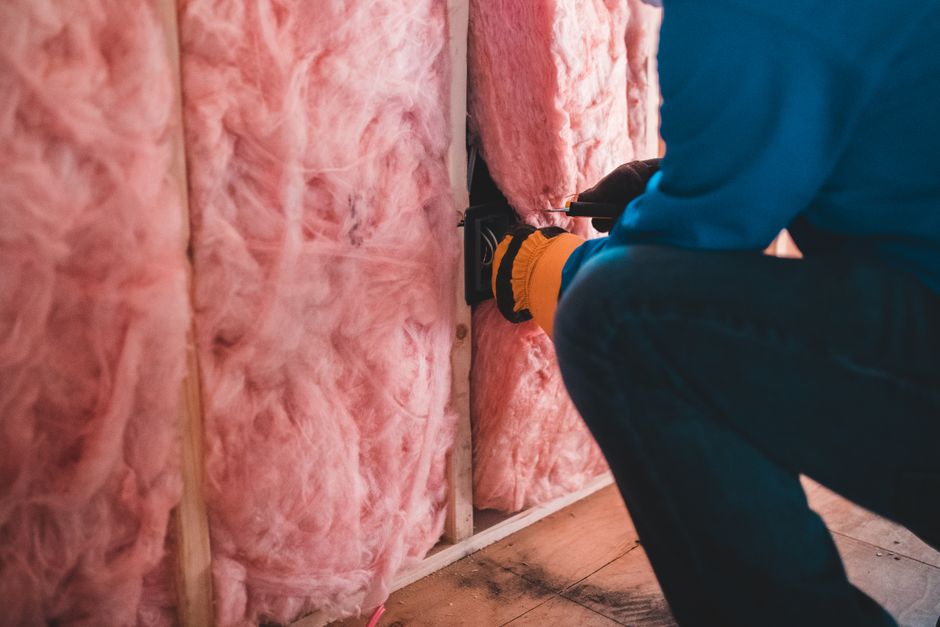
A client called me two years after buying a nineteen fifties ranch that had gone through a full energy retrofit right before it sold, the kind funded through federal and state weatherization grants. Since moving in, the humidity in that house had rarely dropped below 50 percent, even in the middle of winter. Windows ran with condensation. Mold and mildew were starting to show. The homeowner had bought a stand alone dehumidifier that never got a break.
I walked the basement first, because that is usually where these stories start. Two inch rigid foam board lined the walls. The rim joist was air sealed. The attic overhead had roughly R 60 of blown cellulose. On paper, this was a well executed retrofit. Then I looked at the floor. Bare slab, no vapor barrier under it anywhere, and you could see the dampness being drawn straight up through the concrete. Nobody had added a ventilation system either. The crew had done real, careful work sealing this house tight, and then walked away without giving the moisture already inside it anywhere to go.
What The Retrofit Actually Sealed, And What It Missed
Insulation Went On The Walls, Not Under The Floor
Insulating basement walls and air sealing a rim joist are genuinely good moves. But a slab sitting on damp soil with nothing between it and the concrete will keep pulling moisture upward regardless of how well the walls above it are treated. That moisture has to go somewhere once it hits a tighter, less ventilated space, and in this house it was going straight into the air.
Tightening The Enclosure Without Adding Ventilation
The retrofit crew never installed mechanical ventilation. That omission would have mattered less in a leaky house, where enough outdoor air moves through by accident to dilute what is generated inside. Once you air seal a house this thoroughly, that accidental exchange disappears, and whatever moisture the house produces or draws up from the ground has nowhere left to escape.
Why Just Running A Dehumidifier Does Not Fix It
A stand alone dehumidifier treats the symptom, not the source, and it runs constantly precisely because the source was never addressed. The better fix in a case like this is usually a heat recovery or energy recovery ventilator paired with covering that bare slab. An HRV will not remove moisture from the air passing through it, but in most winter climates the outdoor air is already drier than the air inside the house, so simply exchanging that air lowers indoor humidity as a side effect. The catch is that the same mechanism works against you in summer, when outdoor air is often more humid than what is already inside, so an HRV running through a hot, muggy season can raise indoor humidity rather than lower it. In a climate with genuinely humid winters, like the Pacific Northwest, an ordinary HRV will not solve this at all, and the right equipment is closer to a heat pump based ventilator that actively manages humidity rather than a simple air exchanger.
The Water You Do Not See Is Often The Real Source
Hydrostatic Pressure And The Cove Joint
Heavy rain or snowmelt saturates the soil around a foundation, and that saturated soil presses against the walls and floor from the outside with real force, what engineers call hydrostatic pressure. In a newer home with a poured concrete foundation, that pressure has fewer paths in. In an older home built on fieldstone, rubble, or uneven block, it finds one, usually through the cove joint where the floor meets the wall, through cracks in the foundation, straight through porous stone, or back up through a floor drain under pressure. A fieldstone foundation was never built to keep water out in the first place. It was built to hold the house up. Water moving through it after a storm is just physics doing what physics does.
When Sealing It Wrong Creates A New Problem
Fixing bulk water the wrong way can open a different hazard. A drainage trench cut around a basement perimeter that is not properly sealed can create a new pathway for soil gases, including radon, to reach the house. And moisture control failures are not limited to basements below grade. I have seen an enclosed, unventilated porch addition rot from the framing out within about a decade because sealing off the crawlspace underneath cut off the airflow that used to let it dry, with no polyethylene ever laid over the bare dirt to control ground moisture in the first place. From the outside, and even from the inside, nothing looked wrong until the siding came off for an unrelated repair.
What Mold Smell Usually Is Not
Homeowners with a musty basement smell often assume the worst case immediately: something growing behind an insulated wall that they cannot see. In a basement with closed cell foam fully adhered to the concrete, that fear is usually misplaced. Fully adhered closed cell foam is itself an effective air barrier, so even if there is dampness trapped between the foam and the concrete behind it, there is rarely a path for that air, or its smell, to reach the living space. The more common sources of a musty basement smell have nothing to do with what is behind the walls at all. A dried out plumbing trap in a rarely used sink or shower stops blocking sewer gas, and sewer gas often smells like mildew rather than sewage. An old floor drain tied to the sewer line with no trap at all can do the same thing. A masonry chimney can wick groundwater up from the base and hold a damp, musty smell for years. Before anyone opens up a finished or insulated basement wall looking for mold, it is worth ruling out the plumbing and the chimney first, since both are a far cheaper problem to solve.
Where This Leaves Me
None of this means basement retrofits are a bad idea. The Wisconsin house I described earlier still benefited enormously from the insulation and air sealing that had already been done. What it needed was the two things left out, control of moisture coming up through the slab and a real way to exchange the air once accidental leakage was no longer doing that job for free. A tighter basement is only a good outcome if somebody also planned for where the moisture goes.
What I check now on every basement retrofit, in order:
- Confirm there is a vapor barrier under the slab, not just insulation on the walls above it.
- Never air seal a basement or crawlspace this thoroughly without also adding a way to mechanically exchange the air.
- Match the ventilation strategy to the climate, since a plain HRV helps most in cold, dry winters and can backfire in humid ones.
- Trace bulk water to its actual entry point, cove joint, crack, porous stone, or floor drain, before assuming a sump pump alone will solve it.
- Check that any drainage or waterproofing work was sealed properly, since a poorly sealed trench can open a new path for radon.
- Rule out plumbing traps, floor drains, and masonry chimneys before assuming a musty smell means hidden mold behind an insulated wall.