
Homeowners call me expecting a pat on the back for going heavy on insulation. Then I pull back the drywall.
There can be too much of a good thing, and insulation is one of them. Going overboard with insulation and sealing a house too tightly can cause its own problems, from moisture buildup and mold to polluted indoor air. I learned that in my own retrofitted house.
Insulation changes the temperature inside your wall. A surface inside it, like the sheathing under your siding, ends up much colder in winter than before you insulated. That cold surface becomes a place where water vapor condenses, and that is where trouble starts.
Why Attics Get It Worse
Add too much insulation to an attic and condensation gets more likely, not less. Extra insulation means less radiant heat reaches the attic. If no heat radiates upward, the roof sheathing stays close to outdoor temperature, and cold, moist air hitting that cold sheathing condenses into mold.  What looks like mold on the insulation itself usually is not the insulation feeding anything. Fiberglass is not a food source. It is spores falling from the sheathing above, or mold growing on dust settled on top. Air leakage, not diffusion through the material, accounts for as much as 99 percent of moisture movement in a wall, often because a vapor barrier facing got installed backward, trapping moisture with nowhere to go.
What It Looks Like Once You Open the Wall
I have found wet sheathing over fiberglass batts where indoor humidity read only 34 percent, and a vapor barrier still let enough humid air leak around it to soak the sheathing across multiple stud bays. 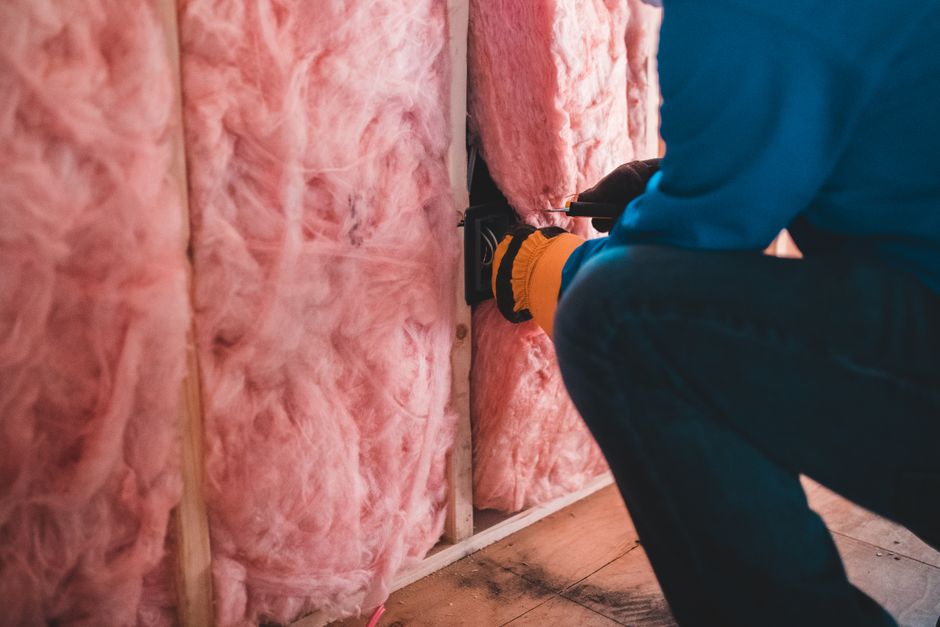 Spray foam carries its own risk when it goes in wrong. As one insulation contractor with more than twenty years in the trade put it, you do not just pick up the gun and start spraying. Installed incorrectly, it can offgas a strong, unpleasant fishy smell and drive people out of their own homes. One indoor air quality scientist called it a game of Russian roulette.
Telling Ordinary Mold From an Actual Problem
Not every dark patch is a crisis. Mold on rigid foam over a damp basement wall is often normal and harmless, since everything on the exterior side of your thermal boundary is effectively outdoors. As long as the interior side stays dry, that is fine. What matters is toxic black mold, which thrives on prolonged moisture and produces mycotoxins linked to respiratory problems, headaches, and fatigue. It carries a slimy, wet texture and a strong, mildew like smell that worsens in humid conditions.
Getting the Fix Right
Air seal first, sealing gaps around outlets, plumbing, and recessed lights so warm air never reaches a cold surface. Attics need 1 square foot of vent area for every 150 square feet, split between soffit intake and ridge exhaust. Vapor barriers belong on the warm side of the assembly, meaning the interior in cold climates and the exterior in hot, humid ones. Mold that has worked into fiberglass batts or cellulose means replacement, not cleaning. Rigid foam board can sometimes be salvaged when growth is only surface level, using a HEPA vacuum and an antifungal spray rather than bleach, which damages insulation.
Living With It
None of this means insulation is the enemy. Going without it costs more in heating and cooling than any of these fixes do. But I no longer treat more insulation as an automatic win, and I check my own walls for the same signs I tell homeowners to watch for. A musty smell is usually the first clue, and mold can show up within 24 to 48 hours of moisture getting into insulation. Here is what I actually check:
- Musty odor near an exterior wall, attic hatch, or crawl space
- Indoor relative humidity, aiming to keep it between 30 and 50 percent
- Vapor barrier facing, pointed toward the warm side of the assembly
- Soffit and ridge vents, confirmed clear of any insulation blocking airflow